WhatsApp is one of the most popular messaging applications in the world, connecting billions of users every day. From personal conversations to business communications, people rely on WhatsApp for fast and secure messaging. However, its popularity has also made it a favorite target for cybercriminals. Recently, a new WhatsApp scam has emerged, putting users’ personal information, financial details, and even entire accounts at risk.
Cybersecurity experts are warning users to remain vigilant and avoid sharing sensitive information through suspicious messages, calls, or links. Understanding how these scams work is the first step toward protecting yourself and your loved ones.
How Does the New WhatsApp Scam Work?
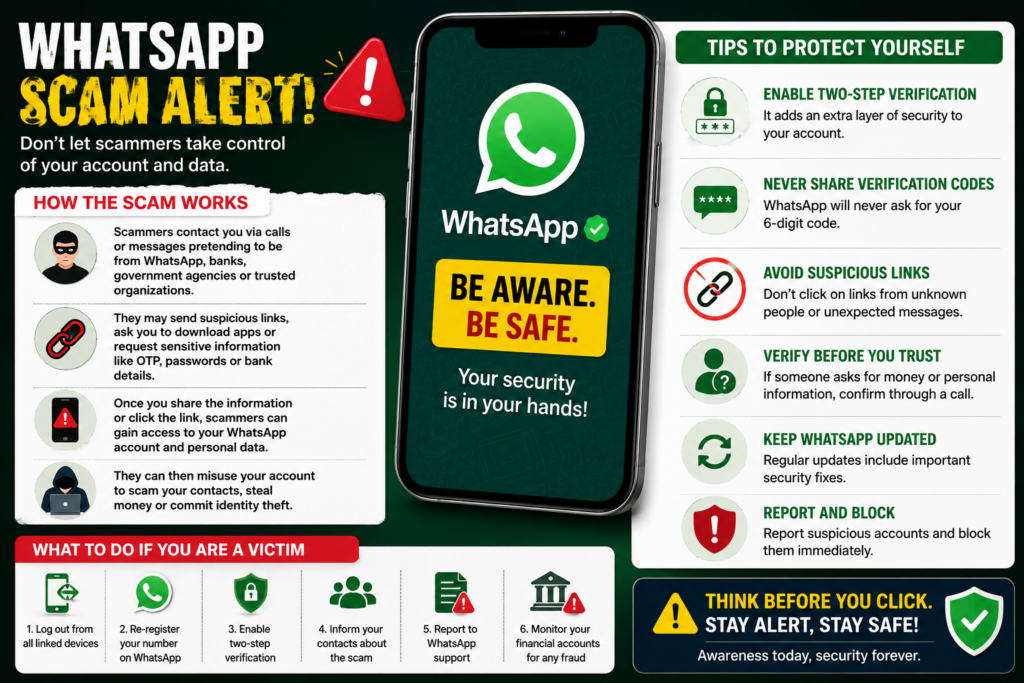
Scammers use various techniques to trick users into revealing confidential information or granting access to their accounts. In many cases, victims receive a message or call from an unknown number claiming to be from WhatsApp support, a government agency, a bank, or a trusted organization.
The scammer may create a sense of urgency by saying that your account will be suspended, your bank account has been compromised, or you have won a prize. They then ask you to click on a link, download an application, share a verification code, or provide personal information.
Once the victim follows the instructions, scammers may gain access to their WhatsApp account, contacts, messages, and sometimes even financial information.
Common Warning Signs of a WhatsApp Scam
Recognizing suspicious behavior can help you avoid becoming a victim. Here are some common warning signs:
1. Requests for Verification Codes
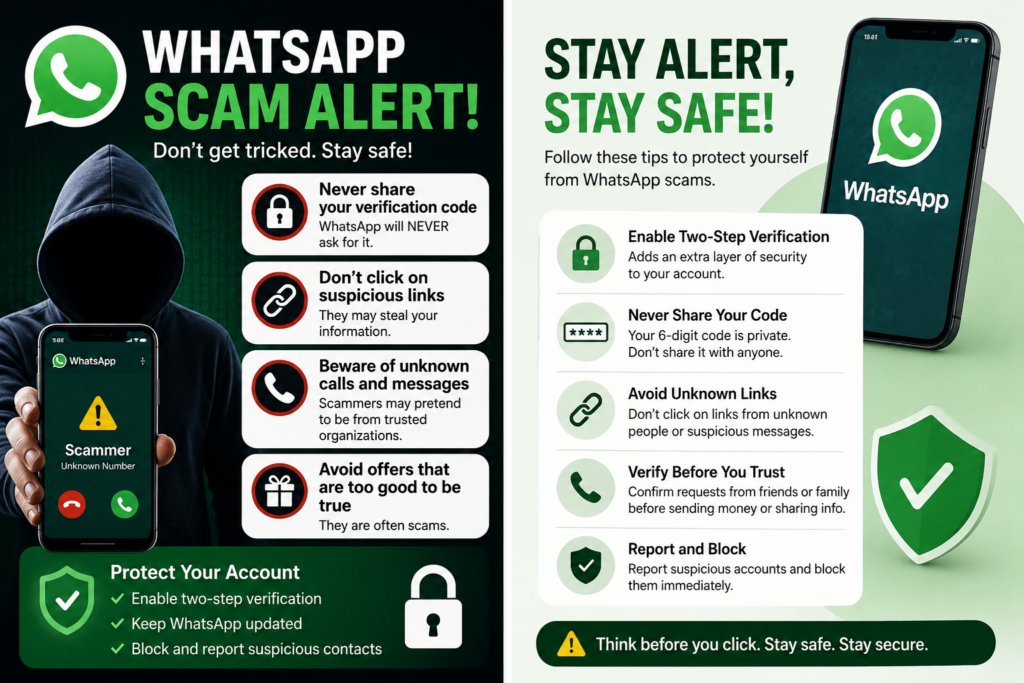
WhatsApp will never ask you to share your six-digit verification code. If anyone requests this code, it is likely a scam.
2. Suspicious Links
Messages containing shortened URLs or unfamiliar websites should be treated with caution. Clicking such links may lead to phishing websites designed to steal your information.
3. Unexpected Calls or Messages
Be cautious when receiving messages from unknown numbers claiming to represent banks, government agencies, or WhatsApp support.
4. Too-Good-To-Be-True Offers
Messages promising free gifts, cash rewards, job opportunities, or lottery winnings are often scams.
5. Urgent Requests
Scammers frequently use fear and urgency to pressure victims into acting quickly without thinking carefully.
Risks Associated with WhatsApp Scams
Falling victim to a WhatsApp scam can have serious consequences, including:
- Unauthorized access to your WhatsApp account
- Theft of personal information
- Financial fraud and monetary losses
- Identity theft
- Exposure of private conversations
- Misuse of your contacts for further scams
Once scammers gain control of an account, they may impersonate the victim and target friends, family members, and business contacts.
How to Protect Your WhatsApp Account
Fortunately, there are several steps you can take to enhance your security and reduce the risk of becoming a victim.
Enable Two-Step Verification
Two-step verification adds an extra layer of security by requiring a PIN whenever your phone number is registered on a new device.
Never Share Verification Codes
Your verification code is private. Never share it with anyone, regardless of who they claim to be.
Verify Before Trusting
If a friend or family member asks for money or personal information through WhatsApp, confirm the request through a phone call or another communication method.
Avoid Clicking Unknown Links
Always verify website addresses before clicking links received through messages.
Keep WhatsApp Updated
Regular updates contain important security improvements and bug fixes that help protect users from emerging threats.
Block and Report Suspicious Accounts
WhatsApp provides options to block and report suspicious users directly from the app.
What to Do If You Become a Victim
If you suspect that your WhatsApp account has been compromised, act immediately:
- Log out of all linked devices.
- Re-register your phone number with WhatsApp.
- Enable two-step verification.
- Inform your contacts about the incident.
- Report the account takeover to WhatsApp support.
- Monitor your financial accounts for unusual activity.
Taking quick action can help minimize damage and prevent further misuse of your information.
Final Thoughts
As technology evolves, cybercriminals continue to develop new methods to target unsuspecting users. While WhatsApp remains a secure platform, users must stay alert and follow basic cybersecurity practices. Never share verification codes, avoid suspicious links, and enable two-step verification to protect your account.
Awareness is your strongest defense against online scams. By staying informed and exercising caution, you can enjoy the benefits of WhatsApp while keeping your personal information safe from fraudsters.
Remember: If a message seems suspicious, unexpected, or too good to be true, it probably is. Stay alert, stay informed, and stay secure.